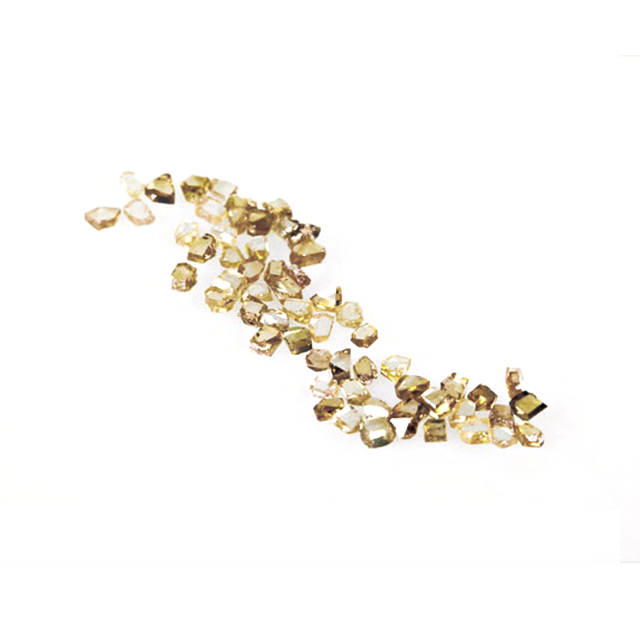
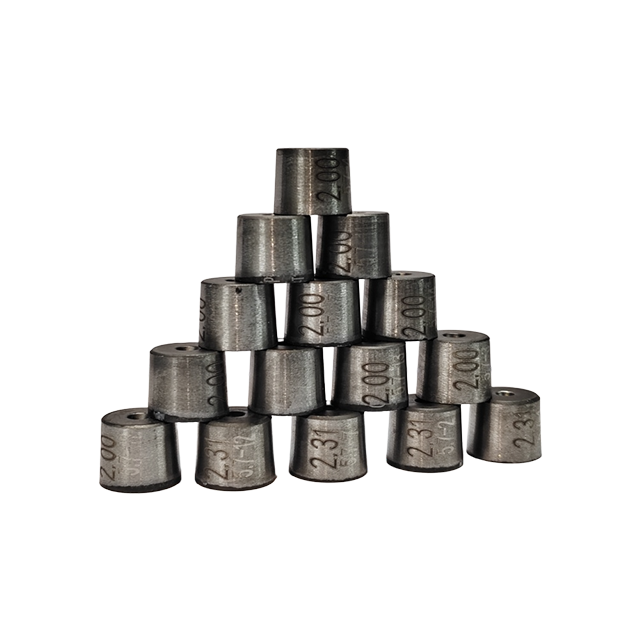
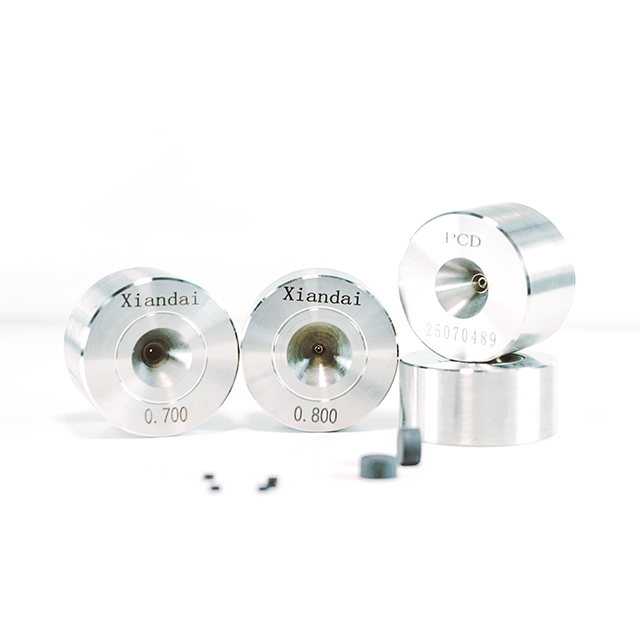
Shaped Drawing Dies are specialized wire forming tools designed to produce non-circular wires with exceptional precision and consistency. Unlike traditional round wire dies, these dies are engineered to create wires with square, flat, hexagonal, or custom cross-sections, solving the multi-pass forming challenges faced by manufacturers in automotive, aerospace, and electrical industries. With advanced precision control and flow-optimized design, Shaped Drawing Dies deliver superior wire quality while streamlining production processes. Whether you’re manufacturing piston ring flat wires, hexagonal electrical contacts, or square structural wires, these dies ensure that each wire meets exact dimensional and geometric specifications, reducing waste and improving overall productivity.
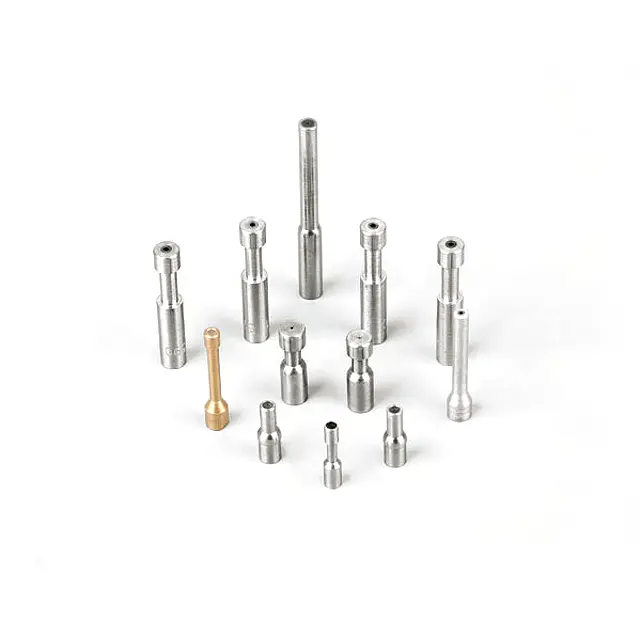
Automotive manufacturers require flat wires for piston rings that have precise thickness, width, and flatness to ensure optimal engine performance and durability. Traditional production methods involve drawing round wire and then flattening it, which is time-consuming and prone to dimensional variations. Shaped Drawing Dies revolutionize this process by forming flat wires in a single pass, eliminating the need for secondary flattening.
Hexagonal wires are widely used in electrical connectors, terminals, and switches due to their excellent conductivity and secure fitting. Producing hexagonal wires with consistent cross-sectional dimensions and sharp corners is challenging with conventional dies. Shaped Drawing Dies are specifically designed to handle this, with precision-engineered hexagonal cavities that ensure uniform wire geometry.
Square wires are used in a variety of structural applications, such as fencing, furniture, and architectural components, where strength and aesthetic appeal are important. Shaped Drawing Dies enable the production of square wires with precise side lengths and right-angle corners, eliminating the need for post-processing.
Shaped Drawing Dies are engineered with extreme precision to create non-circular wire profiles. The die cavities are machined using advanced CNC technology, ensuring profile tolerance as tight as ±3μm. This level of precision ensures that each wire produced has consistent cross-sectional dimensions and geometric accuracy, meeting the most demanding application requirements. Whether you need a standard square, flat, or hexagonal profile, or a custom shape, our dies are designed to replicate the exact profile you need.
To address the unique challenges of non-circular wire drawing, Shaped Drawing Dies feature a flow-optimized design with a variable reduction angle (12°-22° gradient). This gradient ensures that the wire is drawn smoothly through the die, reducing stress and minimizing the risk of breakage. The dies also incorporate a stress-relief structure, which reduces the burst rate by up to 70%, enhancing operational safety and extending the die’s service life. This thoughtful design ensures that even complex non-circular wires are produced with minimal waste and maximum efficiency.
Shaped Drawing Dies are manufactured using high-wear-resistance materials, including carbide and PCD, depending on the application requirements. These materials are selected for their exceptional hardness and durability, ensuring that the die maintains its precision profile even after prolonged use. The choice of material is tailored to the wire material and production volume, with carbide being ideal for high-volume production of standard non-circular wires and PCD for more demanding applications requiring extreme precision and wear resistance.
Flow Optimization
Variable reduction angle (12°-22° gradient)
Stress-relief structure (burst rate ↓70%)
Efficiency Case: Piston ring flat wires formed in single pass, replacing "round drawing + flattening" process, productivity ↑130%
Mold Type | Optimal Wire Range | Lifespan Index | Cost Performance | Typical Applications |
Natural Diamond Dies | Φ0.010-1.2mm | ★★★★ | ★★★ | Medical guidewires / Gold bonding wires |
PCD Dies | Φ0.03-20mm | ★★★★ | ★★★★ | Stainless steel wires / PV cutting wires |
Carbide Dies | Φ0.1-40mm | ★★ | ★★★★★ | Construction steel strands / Galvanized wires |
Nano-Coated Dies | Φ0.5-10mm | ★★★★★ | ★★★★★ | Superalloys / Copper-clad steel wires |
Single Crystal Dies | Φ0.015-1.0mm | ★★★★ | ★★★ | Semiconductor dicing / IC packaging |
We specialize in providing custom Shaped Drawing Dies to meet the unique needs of your non-circular wire production. Our team of engineering experts works closely with you to understand your specific wire profile, material, diameter, and production requirements. Whether you need a custom flat wire with specific thickness and width, a hexagonal wire with unique side lengths, or a completely custom non-circular profile, we can design and manufacture a die that is perfectly suited to your needs. We use advanced 3D modeling and simulation software to optimize the die’s design, ensuring smooth wire flow and precise profile replication. With our customization services, you get a tool that enables you to produce unique wires that stand out in the market, giving you a competitive edge.
Shaped Drawing Dies can produce a wide range of custom non-circular profiles, including square, flat, hexagonal, triangular, rectangular, and special-shaped profiles tailored to your specific application. Our engineering team can work with you to design a die for any non-circular shape you need, as long as it is technically feasible for wire drawing.
Shaped Drawing Dies are designed with a variable reduction angle (12°-22° gradient) and a stress-relief structure to handle the stress of non-circular wire drawing. The variable reduction angle ensures smooth wire flow, reducing friction and stress concentration, while the stress-relief structure minimizes the risk of wire breakage and die burst. This design ensures that even complex non-circular wires are drawn with minimal stress and maximum efficiency.
Shaped Drawing Dies are compatible with a wide range of wire materials, including steel, stainless steel, copper, aluminum, brass, and various alloys. The choice of die material (carbide or PCD) is tailored to the wire material, with carbide being suitable for most materials and PCD recommended for harder or more abrasive materials.