Views: 0 Author: Site Editor Publish Time: 2026-10-26 Origin: Site
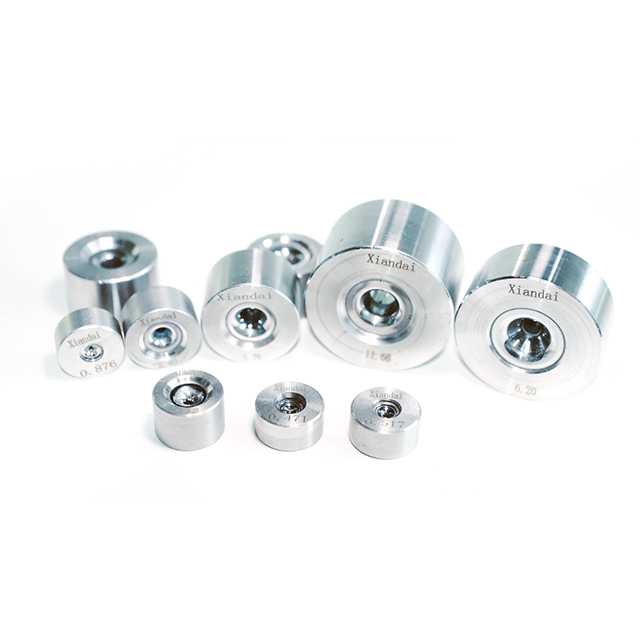
The operational reality of a wire mill hinges on continuous throughput. Drawing dies represent the critical bottleneck where speed, surface quality, and dimensional accuracy intersect. Every millimeter of wire passing through a machine relies on the structural integrity of these small, precision-engineered tools. When continuous pulling generates immense friction and heat, the die must maintain its exact internal geometry. Any deviation directly impacts the final product.
Premature die wear introduces compounding operational challenges in high-speed manufacturing. Microscopic surface defects emerge as the die bearing degrades. These imperfections create stress concentrators, leading to frequent wire breakage. Each break forces unplanned machine downtime. Operators must stop the line, re-string the machine, and scrap the damaged sections. This cycle destroys production schedules and significantly lowers overall facility yield. Managing this wear requires a proactive approach to tooling.
Selecting the right drawing die material demands a rigorous evaluation framework. Facilities must match materials like Polycrystalline Diamond (PCD), Natural Diamond, Tungsten Carbide, and Ceramic to specific production stages. Engineers must evaluate wire hardness, reduction ratios, and total operational lifespan rather than just initial purchase price. A strategic, stage-dependent tooling approach ensures maximum uptime and consistent product quality in Copper Wire Production.
Material Matching is Stage-Dependent: Tungsten carbide is optimal for high-impact rod breakdown, while Polycrystalline Diamond (PCD) and Natural Diamond are required for intermediate and ultra-fine drawing stages.
Surface Finish Dictates Die Selection: Downstream processes like enamel coating or insulation for transformer and electrical equipment wire require specific surface topographies, making natural or single-crystal diamond dies mandatory for final passes.
Die Geometry and Machine Compatibility: Incorrect reduction angles or bearing lengths cause thermal damage and lubrication failure. Die profiles must be customized to the specific drawing equipment (straight-line vs. multi-wire machines) and copper hardness.
Lifecycle Value Outweighs Initial Cost: Evaluating dies based on cost-per-ton of copper wire drawn—factoring in recutting, repolishing lifecycles, and vendor support—provides a more accurate financial metric than upfront tooling costs.
Table of Contents
Precision copper wire drawing requires consistent diameter, smooth surface quality, suitable die geometry, and stable production performance. The correct drawing die helps manufacturers meet conductor specifications while reducing tooling wear and production interruptions.
Wire diameter directly affects conductor cross-sectional area and electrical resistance. Even small dimensional variations can affect product consistency.
The bearing section of a drawing die helps control the final wire diameter. As the die wears, the bore may become enlarged or uneven, resulting in out-of-tolerance wire.
For continuous production, Polycrystalline Diamond (PCD) Drawing Dies provide excellent wear resistance and can help maintain stable dimensions over extended drawing runs.
Manufacturers should monitor:
Final wire diameter and ovality.
Die bore wear.
Dimensional consistency between production batches.
Compliance with applicable AWG or metric specifications.
A smooth wire surface is important for electrical conductors, magnet wires, and coated copper products.
Poor die surface quality, insufficient lubrication, or contamination can create scratches and other defects during drawing.
For demanding fine-wire applications, Single Crystal Drawing Dies can provide precise bore geometry and a high-quality surface finish.
Proper die polishing and lubrication help maintain consistent wire quality.
Die selection should match copper wire properties and drawing machine requirements.
Hard-drawn and annealed copper may require different processing conditions because their mechanical properties differ.
Important factors include:
Incoming wire diameter and hardness.
Reduction ratio and die angle.
Bearing length.
Drawing speed and machine configuration.
Wet or dry lubrication conditions.
Modern Diamond provides customized PCD Drawing Dies with selectable bore sizes, reduction angles, and bearing lengths for different wire drawing applications.
Reliable drawing dies help reduce unexpected wire breakage and production interruptions.
Frequent die changes or inconsistent drawing conditions can increase downtime and labor costs.
Wear-resistant tooling and preventive maintenance support stable production.
Quality Factor | Main Requirement | Recommended Action |
|---|---|---|
Wire Diameter | Consistent finished size | Monitor die bore and wire dimensions |
Surface Finish | Minimal scratches and defects | Maintain polished dies and clean lubrication |
Die Geometry | Suitable reduction angle and bearing length | Match die design to wire properties |
Machine Compatibility | Stable drawing speed and tension | Verify drawing sequence and equipment settings |
Production Uptime | Reduced unexpected interruptions | Inspect tooling and plan replacements |
Different wire drawing die materials provide different levels of wear resistance, toughness, and dimensional accuracy. Choosing the right material helps manufacturers improve wire quality, reduce downtime, and control tooling costs.
Tungsten carbide dies offer good toughness and economical performance, making them suitable for general-purpose wire drawing and selected rod breakdown applications.
They are commonly used for larger wire diameters and processes involving significant mechanical loads.
However, carbide may wear faster than diamond-based materials under certain high-volume drawing conditions.
PCD drawing dies provide excellent wear resistance and dimensional stability, making them suitable for continuous copper, aluminum, and alloy wire production.
Their durable working surfaces help maintain consistent bore dimensions and reduce frequent die replacement.
Modern Diamond offers Polycrystalline Diamond (PCD) Drawing Dies with customizable bore diameters, reduction angles, and bearing lengths.
Natural diamond dies are commonly used for fine and ultra-fine wire drawing, where dimensional accuracy and surface finish are particularly important.
They can provide excellent precision but require careful handling and suitable drawing conditions.
Single crystal synthetic diamond dies provide a uniform crystal structure for precision wire drawing applications.
They are suitable for selected fine-wire processes requiring accurate dimensions and a smooth surface finish.
Explore Modern Diamond's Single Crystal Drawing Dies for precision wire manufacturing.
Ceramic drawing dies are used in selected specialized applications requiring suitable hardness, chemical resistance, or thermal properties.
Their suitability depends on the ceramic grade and operating conditions.
For mainstream high-volume copper drawing, carbide and diamond-based dies are generally more common choices.
Die Material | Main Advantage | Typical Application |
|---|---|---|
Tungsten Carbide | Toughness and cost efficiency | Rod breakdown and general wire drawing |
PCD | Excellent wear resistance | Continuous and intermediate drawing |
Natural Diamond | High precision | Fine and ultra-fine wire |
Single Crystal Diamond | Consistent crystal structure and fine finish | Precision finishing |
Ceramic | Specialized material properties | Selected specialty wire processes |
The best drawing die material depends on wire diameter, production speed, drawing force, and surface quality requirements.
Rod breakdown involves reducing relatively large wire rods into smaller diameters.
The dies must tolerate high drawing forces and possible variations in incoming wire quality.
Tungsten carbide is often selected for its toughness, while suitable PCD dies may be used in later stages when wear resistance becomes more important.
Intermediate drawing requires stable dimensions during continuous production.
PCD dies are widely used because they can maintain their working geometry and provide good wear resistance.
Correct reduction angles, bearing lengths, and lubrication are essential for reliable results.
Fine-wire production places greater emphasis on precise dimensions and surface finish.
Natural diamond and single crystal diamond dies are suitable options for demanding finishing applications.
PCD may also be used depending on the finished diameter, tolerance, and required surface quality.
Drawing Stage | Main Requirement | Common Die Options |
|---|---|---|
Rod Breakdown | Toughness and high-load performance | Tungsten Carbide, selected PCD |
Intermediate Drawing | Wear resistance and stable diameter | PCD |
Fine Drawing | Dimensional accuracy and surface finish | PCD, Natural Diamond, Single Crystal |
Ultra-Fine Drawing | Very precise geometry and smooth finish | Natural Diamond, Single Crystal |
These are general selection guidelines. Actual die choice depends on the wire material and production process.
Explore the full range of Wire Drawing Dies for different wire materials and production requirements.
The initial die price does not fully represent its operating value. Manufacturers should consider usable production output, maintenance requirements, and replacement frequency.
Cost per ton of acceptable wire provides a practical way to compare drawing dies.
A longer-lasting die may reduce production interruptions and replacement costs.
A simple calculation is:
Tooling Cost per Ton = Total Die Cost ÷ Total Acceptable Wire Output
When comparing suppliers, use consistent wire materials, drawing conditions, and quality requirements.
Some drawing dies can be recut or repolished after wear, allowing them to be used for suitable larger bore sizes.
Refurbishment feasibility depends on the remaining die material, condition, and required dimensions.
Modern Diamond provides Custom Die Engineering and Technical Support for industrial wire drawing applications.
Die geometry and surface condition influence friction and drawing force.
A suitable reduction angle and properly finished bearing section can help maintain stable wire drawing.
Regular inspection and appropriate lubrication may reduce unnecessary mechanical losses.
However, actual energy savings depend on machine configuration and operating conditions.
When evaluating a drawing die manufacturer, consider:
Material options and die specifications.
Custom bore dimensions and profile design.
Quality inspection capabilities.
Technical support for multi-pass drawing.
Available refurbishment services.
Delivery requirements and long-term supply reliability.
Proper maintenance helps extend drawing die life and maintain consistent wire quality.
Insufficient lubrication increases friction, heat, and die wear.
Monitor lubricant concentration, temperature, cleanliness, and flow according to process requirements.
Unsuitable reduction angles or bearing lengths may increase drawing force and affect finished wire dimensions.
Die geometry should match the wire material, reduction ratio, and production conditions.
Chipping, scratches, and mechanical damage can reduce die performance.
Handle drawing dies carefully and inspect the working surfaces regularly.
Problem | Possible Cause | Recommended Action |
|---|---|---|
Frequent Wire Breakage | Poor lubrication or excessive reduction | Review drawing conditions |
Inconsistent Wire Diameter | Die bore wear | Inspect and measure the die |
Surface Scratches | Damaged die or contamination | Check die surface and cleanliness |
Short Die Life | Incorrect geometry or abrasive material | Review die selection |
Increased Drawing Force | Excessive friction or worn tooling | Inspect lubrication and die condition |
Selecting the correct drawing die material and maintaining suitable operating conditions can improve production stability and reduce long-term tooling costs.
Modern Diamond supplies customized PCD, carbide, natural diamond, and single crystal drawing dies for industrial wire production.
Contact Modern Diamond to discuss wire material, incoming diameter, finished diameter, drawing speed, and tooling requirements.
Optimal copper wire production requires a staged, highly engineered tooling approach. There is no single universal die material. Tungsten Carbide provides the impact resistance necessary for initial breakdown. Polycrystalline Diamond delivers the durability required for intermediate volume drawing. Natural Diamond and Single Crystal Synthetic Diamond provide the flawless surface finish demanded in fine finishing passes. Aligning these materials with their specific operational strengths guarantees continuous, high-yield production.
Engineering teams must audit their current operational metrics. Analyzing scrap rates, downtime logs, and surface finish rejections reveals exactly which drawing stage causes the most operational bleed. Identifying the specific bottleneck allows facilities to target their tooling upgrades effectively. Upgrading the dies in the most problematic machine section provides immediate improvements in throughput and wire quality.
To implement these improvements, facilities should take the following steps:
Partner with a specialized die manufacturer to engineer custom profiles based on your specific machine reduction ratios.
Initiate a pilot test on a single machine line to establish baseline metrics for yield-per-ton and wire breakage.
Implement strict ultrasonic cleaning and microscopic inspection protocols in the die-room.
Establish a continuous recutting and refurbishment loop to maximize the lifecycle of your PCD and Tungsten Carbide inventory.
A: Natural Diamond or Single Crystal Synthetic Diamond (SSCD) are the best materials for ultra-fine wire. They provide the superior surface finish and exceptionally tight dimensional tolerances required for sensitive electrical equipment and magnet wire. These single-crystal structures offer the lowest friction coefficient, preventing surface scratching and ensuring uniform enamel adhesion during downstream coating processes.
A: Lifespan is measured in total tonnage or kilometers drawn rather than time. The exact duration depends heavily on drawing speed, machine reduction ratios, wire hardness, and the quality of the hydrodynamic lubrication. Proper maintenance, including regular ultrasonic cleaning and proactive inspection, significantly extends this operational lifecycle before recutting becomes necessary.
A: Yes. Tungsten Carbide and PCD dies undergo a rigorous recutting and repolishing process. Skilled technicians use ultrasonic machining and diamond wire polishing to resize worn dies to the next standard diameter. This effectively renews the tool for larger drawing stages, maximizing the lifecycle yield of the original raw material.
A: Wire breaks primarily due to worn die bearings, incorrect approach angles, lubricant failure, mismatched machine tension, or hard inclusions present in the raw copper rod. Maintaining precise die geometry minimizes tension spikes. Ensuring clean, properly mixed emulsion fluid prevents the localized overheating that leads to sudden wire fractures.
A: PCD features a synthetic, multi-grain structure that offers uniform wear and extreme durability for high-volume runs. Natural diamond consists of a single-crystal structure that provides a superior, mirror-like smoothness but is more susceptible to impact fracture. PCD dominates intermediate stages, while natural diamond is reserved for final finishing.
A: The approach angle controls how the metal deforms and pulls lubricant into the die. The bearing length finalizes the exact diameter and smooths the surface. Incorrect angles cause excessive friction, leading to scratches, galling, and uneven wear. Customizing these angles to the specific copper hardness ensures a flawless finish.
A: Hard-drawn copper alloys require dies with shallower approach angles and tougher materials to manage higher drawing forces. Soft, annealed copper allows for steeper angles but requires highly polished dies to prevent surface tearing and material adhesion. Matching the die profile to the metallurgical state prevents central bursting and excessive wear.