Carbide Enameling Dies are engineered to deliver reliable and economical coating solutions for medium and large wire applications. Built with a focus on cost-effectiveness without compromising on performance, these dies are ideal for industries that require high-volume production with consistent results. From industrial motors to automotive harnesses and building cables, Carbide Enameling Dies offer a practical and durable solution that meets the demands of modern manufacturing. With their innovative design and premium materials, these dies strike the perfect balance between quality and affordability, making them a top choice for businesses looking to optimize their production processes.
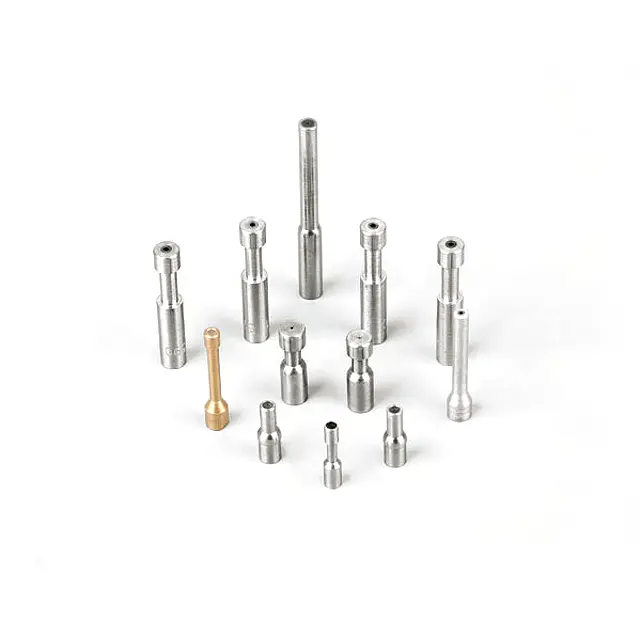
Industrial motors rely on high-quality enameled wires to ensure efficient and reliable operation. Carbide Enameling Dies are designed for mass production of these wires, offering fast line speeds and consistent coating uniformity. The dual-stage pressure relief flow channel of the dies ensures smooth material flow, reducing waste and increasing production efficiency. Whether used in small fractional horsepower motors or large industrial machines, these dies deliver the performance and durability needed to meet high-volume production targets.
Automotive harnesses require wires with dual-layer coatings (such as PVC+XLPE) to provide protection against moisture, heat, and mechanical stress. Carbide Enameling Dies excel in this application, with their anti-fray technology and modular design enabling seamless synchronous coating of both layers. The 30° polished entry of the dies reduces friction, preventing wire damage and ensuring that the coatings adhere firmly to the wire surface. This makes them ideal for use in automotive manufacturing, where reliability and safety are paramount.
Building cables must meet strict fire safety standards, requiring insulation coatings that can withstand high temperatures and prevent the spread of fire. Carbide Enameling Dies are capable of applying fireproof ceramic coatings to wires used in building infrastructure, ensuring continuous operation at elevated temperatures. The nano-composite coating (TiAlN/DLC) of the dies provides excellent wear resistance, ensuring that the dies maintain their performance even when coating abrasive ceramic materials.
Parameter | Diamond Enameling Dies | Carbide Enameling Dies |
Applicable Wire Diameter | Φ0.015-0.5mm | Φ0.1-5.0mm |
Coating Uniformity | ±0.5μm | ±1.2μm |
Max. Line Speed | 1,200 m/min | 800 m/min |
Temp. Resistance | 450°C (CVD Diamond) | 300°C (TiAlN Coating) |
Die Lifespan | 50,000 km enameled wire | 15,000 km enameled wire |
Typical Coatings | Polyimide/Corona-resistant | Polyester/Polyurethane/ |
varnish | Ceramic-based coatings | |
Maintenance Cost | $8 per 10,000 km | $2.5 per 10,000 km |
Carbide Enameling Dies feature a base material of YG6X carbide, combined with a nano-composite coating (TiAlN/DLC) for enhanced durability and performance. This combination provides eight times the lifespan of steel dies, reducing the need for frequent replacements and lowering production costs. The carbide material also offers excellent resistance to wear and corrosion, making the dies suitable for use with a wide range of coating materials.
The innovative dual-stage pressure relief flow channel of Carbide Enameling Dies ensures smooth and consistent coating application, even at high line speeds. The modular design of the dies enables quick and easy specification switching, with changeover times as short as 15 minutes. This flexibility allows manufacturers to adapt to changing production needs quickly, improving overall efficiency and reducing downtime.
We recognize that every manufacturing process is unique, which is why we offer flexible customization services for Carbide Enameling Dies. Our team of engineers can tailor the dies to your specific requirements, including custom bore ranges, coating compatibility, and structural modifications. Whether you need a die for a specific wire diameter, coating material, or production environment, we can create a solution that fits seamlessly into your workflow. Our commitment to customer satisfaction means that we work closely with you throughout the customization process, ensuring that the final product meets your exact needs and expectations.
Carbide Enameling Dies offer a cost-effective solution for medium and large wire coating, with a lifespan eight times that of steel dies and a fraction of the cost of diamond dies. Their durable construction and innovative design ensure consistent performance in high-volume production, making them ideal for industries that require both quality and affordability.
Yes, Carbide Enameling Dies are designed to handle dual-layer coating applications, such as PVC+XLPE coatings for automotive harnesses. The dual-stage pressure relief flow channel ensures that both layers are applied evenly and smoothly, with excellent adhesion to the wire surface.
The modular design of Carbide Enameling Dies allows for quick and easy specification switching, with changeover times as short as 15 minutes. This flexibility enables manufacturers to adapt to changing production needs quickly, reducing downtime and improving overall efficiency.