Views: 0 Author: Site Editor Publish Time: 2026-06-17 Origin: Site
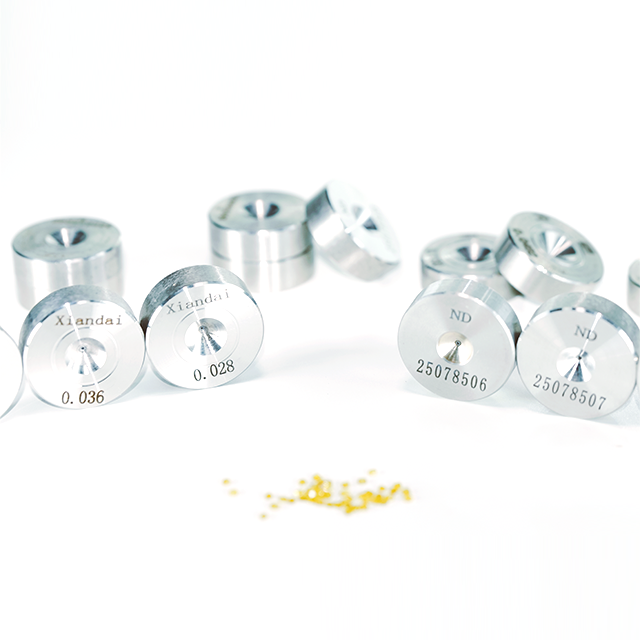
Wire drawing dies are the core tooling used in the wire drawing process, directly influencing wire diameter, surface finish, production speed, and manufacturing efficiency. Because drawing dies operate under extremely high pressure and continuous friction, selecting the appropriate die material is essential for achieving long service life and consistent wire quality. Different materials—including tungsten carbide, polycrystalline diamond (PCD), natural diamond, single-crystal diamond, and ceramic—offer unique advantages depending on the wire material, production volume, and precision requirements. This guide explains the most common materials used for wire drawing dies, compares their performance, and provides practical recommendations for selecting the best die material for different applications.
The most common materials used for wire drawing dies are tungsten carbide, polycrystalline diamond (PCD), natural diamond, single-crystal synthetic diamond, and ceramic. Tungsten carbide is widely used for general wire production because of its durability and cost-effectiveness, while PCD and diamond dies are preferred for high-speed, fine wire drawing where superior wear resistance, dimensional accuracy, and surface finish are required.
Wire drawing dies are manufactured from several advanced materials, each designed to meet different production requirements. No single die material is suitable for every wire drawing application. Instead, manufacturers select die materials based on wire material, finished wire diameter, production speed, required surface finish, tooling life, and overall manufacturing cost.
Today, the five most commonly used wire drawing die materials are tungsten carbide, polycrystalline diamond (PCD), natural diamond, single-crystal synthetic diamond, and ceramic. Each material offers a different balance of hardness, wear resistance, toughness, precision, and cost, making it suitable for specific stages of the wire drawing process.
The following table provides a quick overview of the characteristics and typical applications of each material.
Table 1. Wire Drawing Die Materials Overview
Die Material | Main Advantages | Best Applications | Relative Cost |
|---|---|---|---|
Tungsten Carbide | Excellent toughness, high compressive strength, cost-effective | Carbon steel wire, stainless steel wire, welding wire, general industrial wire | Low |
Polycrystalline Diamond (PCD) | Outstanding wear resistance, long service life, excellent surface finish | Copper wire, aluminum wire, magnet wire, communication cable | Medium–High |
Natural Diamond | Exceptional precision, ultra-low friction, superior surface finish | Ultra-fine wire, precious metal wire, laboratory wire | High |
Single-Crystal Diamond | Outstanding dimensional consistency, stable crystal structure, excellent wear resistance | Semiconductor wire, bonding wire, medical guidewire, precision electronic conductors | Very High |
Ceramic | Good hardness, excellent chemical resistance, stable performance in specialized environments | Specialty wire drawing and corrosion-sensitive applications | Medium |
Tungsten carbide remains the industry standard for general-purpose wire drawing because it provides an excellent balance of toughness, durability, and cost.
PCD drawing dies are the preferred solution for high-speed production of copper, aluminum, and other non-ferrous wires due to their superior wear resistance and long service life.
Natural diamond and single-crystal diamond dies are designed for ultra-fine and precision wire applications where exceptional dimensional accuracy and surface quality are critical.
Ceramic dies are primarily used in specialized applications requiring chemical stability and resistance to corrosive environments.
In many modern wire drawing plants, manufacturers combine multiple die materials within the same production line to optimize tooling cost, productivity, and finished wire quality.
Industry Insight
Rather than relying on a single die material throughout the production process, many manufacturers adopt a hybrid tooling strategy. For example, tungsten carbide dies are commonly used for rough drawing because of their toughness and cost-effectiveness, while PCD or diamond dies are used for intermediate and finishing operations where wear resistance, dimensional accuracy, and surface finish become increasingly important.
Selecting the right wire drawing die material requires more than simply choosing the hardest available material. Each die material offers a different balance of mechanical properties, thermal performance, and economic value. Understanding these key characteristics helps manufacturers optimize productivity, improve wire quality, and reduce total operating costs.
Hardness determines a die's ability to resist deformation during continuous drawing. A harder die maintains its geometry for a longer period, helping manufacturers produce wire with consistent diameter and dimensional accuracy. Diamond-based materials provide the highest hardness, while tungsten carbide offers an excellent balance between hardness and toughness.
Wear resistance directly affects die service life. Materials with superior wear resistance maintain their bearing surfaces for longer production runs, reducing the frequency of die replacement and minimizing machine downtime. PCD and diamond dies generally outperform carbide in high-volume production environments.
Although hardness is important, drawing dies must also resist impact and mechanical stress. Tougher materials are less likely to chip or crack during heavy-duty drawing operations. Tungsten carbide remains the preferred choice for rough drawing and larger wire sizes because of its excellent toughness.
High-speed wire drawing generates significant heat through friction. Materials with excellent thermal conductivity dissipate heat more efficiently, reducing thermal damage to both the wire and the drawing die. Better heat transfer also contributes to longer tool life and more stable production.
Lower friction reduces drawing force, decreases heat generation, and improves wire surface finish. Diamond-based materials naturally exhibit lower friction coefficients than carbide, making them particularly suitable for copper, aluminum, and other non-ferrous wire applications.
Purchase price should never be the only consideration when selecting a drawing die material. Manufacturers should evaluate the total cost of ownership, including die life, maintenance frequency, production downtime, wire quality, and machine utilization. In many high-volume production environments, a higher-performance die delivers lower overall manufacturing costs despite its higher initial investment.
Property | Why It Matters |
|---|---|
Hardness | Maintains die geometry and dimensional accuracy |
Wear Resistance | Extends service life and reduces replacement frequency |
Toughness | Prevents chipping and cracking under heavy loads |
Thermal Conductivity | Dissipates heat during high-speed drawing |
Low Friction | Improves wire surface finish and reduces drawing force |
Lifecycle Cost | Determines long-term manufacturing efficiency |
Buyer Tip
Rather than selecting the hardest material available, manufacturers should evaluate the complete production process—including wire material, drawing speed, production volume, and quality requirements—to identify the die material that provides the best long-term value.
Modern wire drawing operations utilize several advanced die materials, each offering unique advantages for different production environments. Understanding the strengths and limitations of each material helps manufacturers select the most appropriate tooling for their specific applications.
Tungsten carbide has been the foundation of industrial wire drawing for decades and remains the most widely used die material worldwide. Its excellent combination of hardness, toughness, and affordability makes it suitable for a broad range of wire drawing applications.
Excellent toughness and impact resistance
High compressive strength
Good wear resistance
Competitive purchase cost
Easy maintenance and replacement
Suitable for rough drawing and general production
Lower wear resistance than diamond-based materials
Higher friction during high-speed drawing
Shorter service life in fine wire applications
Surface finish gradually declines as wear increases
Carbon steel wire
Stainless steel wire
Medium- and large-diameter wire
Welding wire
Spring wire
Construction wire
Best suited for: General-purpose wire drawing where tooling cost, durability, and toughness are the primary considerations.
Table 2. Tungsten Carbide Die Characteristics
Property | Performance |
|---|---|
Hardness | Excellent |
Toughness | Excellent |
Wear Resistance | Excellent |
Surface Finish | Good |
Service Life | Long |
Relative Cost | Low |
PCD drawing dies are manufactured by sintering microscopic synthetic diamond particles under ultra-high pressure and temperature. This engineered structure combines exceptional hardness with improved toughness, making PCD one of the most widely used materials for high-speed wire drawing.
Compared with conventional carbide dies, PCD provides significantly longer service life, lower friction, and superior dimensional stability during continuous production.
Outstanding wear resistance
Excellent surface finish
Long die service life
Low friction coefficient
Stable dimensional accuracy
Ideal for continuous high-speed production
Higher initial investment
Greater manufacturing complexity
Not always the most economical option for low-volume production
Copper wire
Aluminum wire
Magnet wire
Communication cable
Electronic conductors
Fine non-ferrous wire
Best suited for: High-volume production requiring superior wire quality, longer die life, and maximum manufacturing efficiency.
Although both materials are widely used, they serve different production objectives. Tungsten carbide provides excellent toughness and lower tooling costs, while PCD delivers superior wear resistance, reduced downtime, and lower lifecycle costs in continuous production. Many manufacturers combine both materials—using carbide for rough drawing and PCD for intermediate and finishing stages—to achieve the optimal balance between productivity and operating cost.
Table 3. PCD Die Characteristics
Property | Performance |
|---|---|
Hardness | Outstanding |
Wear Resistance | Outstanding |
Surface Finish | Excellent |
Production Speed | Excellent |
Service Life | Very Long |
Relative Cost | Medium to High |
Natural diamond has been used in precision wire drawing for decades because of its exceptional hardness and ability to produce extremely smooth wire surfaces.
These dies are typically reserved for applications requiring very fine wire diameters and high dimensional precision.
Exceptional hardness
Outstanding surface finish
Extremely accurate wire diameter
Very low friction
High purchase cost
Limited availability
Smaller practical drawing sizes
Brittle compared with PCD
Precious metal wire
Medical wire
Precision electronic wire
Laboratory wire
Ultra-fine copper wire
Table 4. Natural Diamond Die Characteristics
Property | Performance |
|---|---|
Hardness | Exceptional |
Surface Finish | Outstanding |
Precision | Outstanding |
Wear Resistance | Excellent |
Service Life | Long |
Relative Cost | High |
In addition to tungsten carbide, PCD, and natural diamond, several specialized materials are used for demanding wire drawing applications.
Each material offers unique advantages depending on production requirements.
Single-crystal synthetic diamond dies are manufactured under carefully controlled laboratory conditions, producing an extremely pure crystal structure.
Compared with natural diamond, they offer:
Excellent dimensional consistency
Outstanding wear resistance
Superior surface finish
Stable quality from batch to batch
These dies are widely used for:
Ultra-fine copper wire
Bonding wire
Medical guidewire
Semiconductor wire
Precision electronic conductors
Ceramic dies are used in certain specialized applications where corrosion resistance and chemical stability are important.
Advantages include:
High hardness
Good wear resistance
Excellent chemical resistance
Stable performance in specific applications
However, ceramics are generally more brittle than carbide or diamond materials and therefore are less common in heavy-duty industrial wire drawing.
Choosing the right wire drawing die material requires balancing mechanical performance, production efficiency, tooling life, and overall manufacturing cost. While each material offers distinct advantages, no single solution is ideal for every wire drawing application.
The following comparison summarizes the key characteristics of the most commonly used wire drawing die materials.
Die Material | Hardness | Wear Resistance | Toughness | Surface Finish | Service Life | Relative Cost |
|---|---|---|---|---|---|---|
Tungsten Carbide | Excellent | Excellent | Outstanding | Good | Long | Low |
Polycrystalline Diamond (PCD) | Outstanding | Outstanding | Very Good | Excellent | Very Long | Medium–High |
Natural Diamond | Exceptional | Exceptional | Moderate | Outstanding | Long | High |
Single Crystal Diamond | Exceptional | Exceptional | Good | Outstanding | Very Long | Very High |
Ceramic | Good | Good | Moderate | Good | Medium | Medium |
Tungsten carbide offers the best balance of toughness and affordability for general industrial wire drawing.
PCD provides the best combination of wear resistance, service life, and productivity for high-volume manufacturing.
Natural diamond excels in ultra-fine wire applications requiring exceptional dimensional accuracy and surface finish.
Single crystal diamond delivers highly consistent quality for precision electronic and semiconductor wire production.
Ceramic is primarily used in specialized applications where chemical resistance or specific material compatibility is required.
Production Requirement | Recommended Material | Primary Reason |
|---|---|---|
Carbon Steel Wire | Tungsten Carbide | Excellent toughness and cost-effectiveness |
Stainless Steel Wire | Tungsten Carbide | High compressive strength and durability |
Copper Wire | PCD | Superior wear resistance and low friction |
Aluminum Wire | PCD | Improved surface finish and longer die life |
Magnet Wire | PCD | High-speed continuous production capability |
Fine Wire | PCD | Stable dimensional accuracy |
Ultra-Fine Wire | Natural Diamond | Exceptional precision and smooth surface finish |
Semiconductor Wire | Single Crystal Diamond | Outstanding consistency and dimensional stability |
Medical Guidewire | Single Crystal Diamond | Precision manufacturing requirements |
Specialized Corrosive Applications | Ceramic | Excellent chemical resistance |
Selecting a wire drawing die material should never be based solely on hardness or purchase price. Instead, manufacturers should evaluate the complete production environment, including wire material, production speed, wire diameter, surface finish requirements, expected tooling life, and lifecycle cost.
For many modern production lines, combining multiple die materials delivers the best overall performance. A common strategy is to use tungsten carbide dies during rough drawing operations and PCD or diamond dies during intermediate and finishing stages, where precision, wear resistance, and surface quality become increasingly important.
Production Scenario | Recommended Material |
|---|---|
General Steel Wire | Tungsten Carbide |
High-Volume Copper Wire | PCD |
Aluminum Wire | PCD |
Fine Wire | Natural Diamond |
Semiconductor Wire | Single Crystal Diamond |
Specialized Applications | Ceramic |
Most manufacturers do not select die materials based solely on hardness. Instead, they evaluate wire material, production speed, wire diameter, surface finish requirements, and total operating cost to determine the most suitable tooling solution. In many production lines, combining multiple die materials provides the best balance between productivity, quality, and lifecycle cost.
Selecting the best wire drawing die material depends on the wire material, production speed, finished wire diameter, dimensional tolerance, and required surface finish. Each die material offers distinct advantages for specific manufacturing environments. Understanding these application scenarios helps manufacturers maximize production efficiency while minimizing tooling costs.
Steel wire drawing requires dies capable of withstanding high drawing forces and significant mechanical stress. Tungsten carbide remains the preferred material for most carbon steel and stainless steel applications because it provides excellent toughness, high compressive strength, and reliable wear resistance at a competitive cost.
For rough drawing operations and medium- to large-diameter steel wire, carbide dies deliver the best balance between durability and economic performance.
Recommended Material: Tungsten Carbide
Copper wire production places greater emphasis on surface finish, dimensional consistency, and long die life than on extreme toughness. PCD drawing dies provide lower friction, outstanding wear resistance, and superior surface quality, making them the preferred choice for high-speed continuous production of electrical conductors, communication cables, and magnet wire.
Although the initial investment is higher than carbide, PCD dies often reduce lifecycle costs through fewer die replacements and less production downtime.
Recommended Material: Polycrystalline Diamond (PCD)
Aluminum is softer than steel but tends to adhere to tooling surfaces during drawing. PCD drawing dies reduce friction and material adhesion, allowing smoother drawing and improved wire quality. Their excellent wear resistance also helps maintain stable dimensions throughout long production runs.
For aluminum conductors and lightweight cable production, PCD dies generally provide the highest productivity.
Recommended Material: Polycrystalline Diamond (PCD)
Manufacturing fine wire requires extremely high dimensional accuracy and exceptional surface finish. Even minor die wear can lead to unacceptable diameter variation.
Natural diamond and single-crystal diamond dies are commonly used for ultra-fine wire because they maintain precise die geometry and produce extremely smooth wire surfaces.
Recommended Material: Natural Diamond or Single-Crystal Diamond
Applications such as semiconductor bonding wire, medical guidewire, and precision electronic conductors require consistent dimensional accuracy and stable material properties. Single-crystal diamond dies offer excellent crystal uniformity and outstanding precision, making them ideal for these demanding industries.
Recommended Material: Single-Crystal Diamond
Application | Recommended Material | Primary Advantage |
|---|---|---|
Carbon Steel Wire | Tungsten Carbide | High toughness and durability |
Stainless Steel Wire | Tungsten Carbide | Excellent compressive strength |
Copper Wire | PCD | Long service life and superior surface finish |
Aluminum Wire | PCD | Low friction and improved productivity |
Fine Wire | Natural Diamond | Exceptional precision |
Precision Electronic Wire | Single-Crystal Diamond | Outstanding dimensional consistency |
Specialized Applications | Ceramic | Excellent chemical stability |
Selecting the right wire drawing die material involves more than comparing hardness or purchase price. Manufacturers should evaluate the complete production process to ensure the selected material delivers the best balance of performance, tooling life, and operating cost.
The following factors should always be considered before selecting a drawing die material.
Different metals generate different drawing forces and wear characteristics. Steel typically requires tougher die materials, while copper and aluminum benefit from low-friction, wear-resistant diamond-based dies.
Large-diameter wire emphasizes toughness and durability, whereas fine and ultra-fine wire requires exceptional dimensional accuracy and superior surface finish.
High-speed continuous production generates additional heat and friction. PCD and diamond dies generally provide longer service life and greater process stability under these conditions.
High-volume manufacturing often justifies premium die materials because longer service life reduces downtime and maintenance costs. Lower-volume production may benefit from the lower initial investment of carbide dies.
Applications in electronics, telecommunications, and medical manufacturing require tighter tolerances and smoother wire surfaces, making diamond-based dies the preferred choice.
The lowest purchase price does not always result in the lowest production cost. Manufacturers should evaluate total ownership cost, including die life, replacement frequency, maintenance, production downtime, and product quality.
Wire Material
      ↓
Wire Diameter
      ↓
Production Speed
      ↓
Surface Finish Requirement
      ↓
Production Volume
      ↓
Recommended Die MaterialSelecting the wrong die material can reduce productivity, shorten tooling life, and increase manufacturing costs. The following mistakes are commonly observed in industrial wire drawing operations.
Common Mistake | Better Practice |
|---|---|
Selecting dies based only on hardness | Evaluate the complete production environment before choosing a material. |
Focusing only on purchase price | Compare total lifecycle cost rather than initial investment. |
Using one material for every production stage | Consider combining carbide and diamond-based dies for different drawing stages. |
Ignoring production speed | Match die material to production intensity and operating conditions. |
Delaying die replacement | Implement preventive inspection and maintenance schedules. |
Ignoring lubrication compatibility | Optimize lubricant selection together with die material. |
Many manufacturers achieve the best results by using a hybrid tooling strategy. Carbide dies are commonly used for rough drawing, while PCD or diamond dies are reserved for intermediate and finishing operations where precision and wear resistance become more important.
Before selecting a wire drawing die material or supplier, verify the following:
What wire material will be processed?
What is the finished wire diameter?
What production speed is required?
What level of dimensional accuracy is needed?
How important is surface finish?
What is the expected annual production volume?
Which material offers the lowest lifecycle cost?
Can customized die sizes and geometries be supplied?
Does the supplier provide quality inspection reports?
Is technical support available for die selection and maintenance?
A knowledgeable supplier should recommend the most appropriate die material based on your production process rather than simply offering the most expensive option.
Wire drawing die materials play a critical role in determining wire quality, production efficiency, tooling life, and overall manufacturing cost. While tungsten carbide continues to be the preferred solution for many general-purpose wire drawing applications, PCD drawing dies provide outstanding performance for high-speed copper and aluminum wire production. Natural diamond and single-crystal diamond dies remain the best choice for ultra-fine and precision wire applications, while ceramic materials serve specialized production environments.
Selecting the optimal die material requires evaluating the complete manufacturing process, including wire material, finished wire size, production speed, quality requirements, and total lifecycle cost. By matching the appropriate die material to each application, manufacturers can improve productivity, reduce downtime, extend tooling life, and achieve more consistent wire quality.
Tungsten carbide is the most widely used die material because it offers an excellent balance of toughness, wear resistance, durability, and cost-effectiveness for general industrial wire drawing.
PCD drawing dies provide excellent wear resistance, lower friction, superior surface finish, and longer service life, making them ideal for high-speed copper wire production.
Not always. Natural diamond provides exceptional precision for ultra-fine wire, while PCD generally offers better toughness and longer service life in high-volume industrial production.
Under appropriate operating conditions, PCD and single-crystal diamond dies generally provide the longest service life, particularly in continuous production of non-ferrous wire.
Yes. Many manufacturers combine tungsten carbide, PCD, and diamond dies within the same drawing line to optimize tooling cost, productivity, and wire quality.
Evaluate your wire material, finished wire diameter, production speed, surface finish requirements, production volume, and total lifecycle cost. The best choice is the material that provides the highest long-term production value rather than simply the lowest purchase price.