Views: 0 Author: Site Editor Publish Time: 2026-03-20 Origin: Site
Choosing the right PCD die is crucial for efficient and high-quality wire production. PCD wire drawing dies offer unmatched wear resistance, precision, and longevity, making them ideal for copper, steel, aluminum, and specialty alloy wires. In this guide, we’ll explore the key factors that impact die performance, including material composition, wire properties, die design, reduction ratio, and production requirements. Whether you’re running high-speed operations or working with ultra-fine wires, understanding these factors helps you select the best PCD wire drawing dies for consistent results and maximum ROI.
The material of your PCD wire drawing die is one of the most important factors for success. It determines die life, wire quality, and production efficiency. Different wire types — copper, steel, aluminum, and alloys — require different die materials.
Cobalt-based PCD dies are easier to machine and process. They work well for smaller wires or applications where manufacturing flexibility is key.
Silicon-based PCD dies can withstand higher temperatures and are ideal for large-diameter wires or high-speed drawing.
When choosing a PCD die, consider:
Thermal stability – Can the die handle the heat generated during drawing?
Wear resistance – Will it last for multiple production runs without degrading?
Machinability – Is it compatible with EDM, laser, or ultrasonic processing for maintenance?
| PCD Core Type | Key Advantages | Limitations | Best Use Case |
|---|---|---|---|
| Cobalt-based | Easier to machine, versatile | Lower thermal stability | Small- to medium-diameter wires, moderate production speed |
| Silicon-based | High temperature tolerance, long life | Harder to process | Large wires, high-speed or continuous operations |
Choosing the right PCD die material ensures that it can handle high-strength wires, maintain shape, and produce consistent results over long production cycles.
The type of wire you’re drawing has a huge impact on your PCD die selection. High-strength wires such as alloy steel or stainless steel put more stress on dies than soft copper or aluminum.
Hardness and tensile strength – The harder the wire, the more wear on the die. PCD dies are excellent for abrasive, high-tensile wires.
Wire abrasiveness – Some alloys are more abrasive and can reduce die life faster.
Matching die properties to wire – The die must be hard enough to resist wear but still allow smooth wire flow.
For example, PCD dies for high-carbon steel wire last far longer than carbide dies, maintaining consistent diameter and smoothness. Softer wires also benefit from PCD dies for improved surface finish and less maintenance.
The geometry of a PCD wire drawing die determines how the wire flows through it. The shape of the die hole, taper angle, and entry/exit design all affect quality, efficiency, and lifespan.
Die hole shape – Round, square, oval, triangle, or custom profiles for specialty wires.
Taper and angle – Controls friction and wire elongation. A proper taper reduces stress on both die and wire.
Entry/exit geometry – Ensures smooth wire movement, reduces scratches, and improves roundness.
Good die design also helps maintain tight tolerances and improves the final surface finish of the wire, reducing post-processing needs.
The initial and final diameters of the wire, along with the reduction ratio, are critical in PCD die selection.
Large reductions in a single pass → High stress, faster wear, and potential wire breakage.
Multi-pass drawing → Smaller reductions per pass prolong die life, reduce wire breakage, and maintain quality.
Reduction ratio formula:
[Reduction,Ratio = \frac{Initial,Cross-Sectional,Area}{Final,Cross-Sectional,Area}]
High-strength wires often require smaller reduction steps to avoid overloading the PCD die. For softer metals, larger reductions can be feasible.
Production speed and volume directly impact PCD die performance.
High-speed drawing → Produces heat and friction, increasing wear. PCD dies handle these stresses better than carbide or natural diamond dies.
Low-speed drawing → Less stress on the die; ideal for trial runs or delicate wires.
High-volume operations → PCD dies allow continuous production with minimal downtime.
PCD dies are particularly suited for long runs, ensuring consistent wire quality even in demanding high-speed applications.
Wire surface finish is often as important as dimensional accuracy. PCD wire drawing dies excel in producing smooth, high-quality surfaces.
Die material and polish directly influence scratch-free surfaces.
Applications such as electrical wires, fine copper wires, and specialty alloys require flawless surface finish.
PCD dies often outperform SCD and ND dies over long production runs in surface quality maintenance.
Tips: Regular inspection and polishing of PCD dies keep surface finish consistent over time.
PCD dies are known for longevity, but lifespan depends on several factors:
Heat, pressure, and wire type all accelerate wear.
High-strength or abrasive wires shorten die life if the die isn’t properly selected.
Maintenance and repairability extend the die’s usable life.
| Die Type | Lifespan vs Carbide | Repairability | Typical Use Case |
|---|---|---|---|
| PCD | 50–500× | Yes, multiple times | High-speed, high-volume runs |
| Carbide | Standard | Limited | Short runs, trial production |
| ND | Medium | Limited | Ultra-fine wires, specialty applications |
Well-maintained PCD dies ensure reliable performance, reducing downtime and keeping production costs predictable.
PCD dies may have a higher upfront cost, but they often save money long-term.
Total cost of ownership includes replacement frequency, maintenance, and downtime.
Small runs may still benefit from tungsten carbide dies for cost-efficiency.
Large-scale, high-volume operations almost always see better ROI with PCD dies.
Investing in PCD dies ensures consistent wire quality, fewer disruptions, and overall production efficiency.

When working with specialty wires, choosing the right PCD wire drawing die is critical. These wires include high-strength steel, ultra-fine copper, alloy wires, and custom-shaped profiles. Each material and shape has unique demands that affect die selection.
Different PCD die cores perform better depending on the wire:
Cobalt-based PCD dies – Easy to machine, ideal for small or medium-diameter copper and aluminum wires.
Silicon-based PCD dies – Excellent thermal stability, suited for large-diameter steel or high-strength alloy wires.
Synthetic Single Crystal Diamond (SCD) dies – Best for ultra-fine wires requiring superior surface finish and precision.
Natural Diamond (ND) dies – High hardness and wear resistance, suitable for extremely delicate or decorative wires.
| Wire Type | Recommended PCD Die | Key Benefit | Notes |
|---|---|---|---|
| High-strength steel | Silicon-based PCD | Thermal stability, long life | Can handle high reduction ratios |
| Ultra-fine copper | SCD | Smooth surface finish | High precision, low breakage |
| Alloy wires | Cobalt-based PCD | Machinable, versatile | Medium size, moderate speed |
| Custom profiles | ND / SCD | Shape accuracy | Ensures uniform geometry and roundness |
The reduction ratio of a wire significantly affects both die stress and the integrity of the drawn wire. When drawing hard or high-strength wires, attempting a large reduction in a single pass can lead to wire breakage and accelerated die wear. In these cases, a multi-pass drawing strategy is often necessary to maintain consistent wire quality. Similarly, surface finish requirements play a critical role in die selection.
Applications such as electronics, precision components, or ultra-fine wires demand polished PCD dies to minimize scratches and ensure the wire maintains accurate diameter and smoothness throughout production. Choosing a die that aligns with both reduction ratio and surface finish needs helps prevent defects and improves long-term efficiency.
Selecting a PCD die for specialty wires involves balancing efficiency, durability, and wire quality. Efficiency requires choosing a die that supports the desired production speed without generating excessive heat, which can shorten die life. Durability is equally important, as the die material must withstand wear from abrasive or high-strength wires to maintain consistent performance over long runs.
At the same time, wire quality cannot be compromised: the die design should preserve surface smoothness, roundness, and tight dimensional tolerances. For high-speed or long-duration operations, silicon-based PCD dies often provide the best combination of thermal stability and longevity, while SCD dies may be preferred for ultra-fine or high-precision wires despite their higher cost. Striking this balance ensures stable production, reduces downtime, and maximizes the return on investment for your PCD dies.
Optimizing your PCD wire drawing dies involves more than just choosing the right die. The equipment around it and how you run the process have a huge impact on performance, lifespan, and wire quality.
Heat is the enemy of PCD dies. High-speed wire drawing generates significant friction, which can reduce die life and affect wire quality. Using a water cooling tower helps:
Rapidly dissipates heat from the die and wire.
Maintains stable die temperature for consistent drawing performance.
Reduces thermal stress, preventing graphitization in cobalt-based PCD dies.
| Benefit | Effect on Production |
|---|---|
| Temperature control | Longer die life, stable wire diameter |
| Heat reduction | Less wire breakage, smoother surface |
| Continuous operation | Minimized downtime |
For continuous wire drawing, interruptions from cutting or changing wire lengths can reduce efficiency. Copper wire welding machines allow seamless joining of wire ends:
Enables long, continuous runs without stopping the die.
Reduces waste by joining scrap ends to new wire.
Keeps tension consistent, improving wire uniformity.
This approach is especially useful in high-volume operations using PCD dies for copper or aluminum wires.
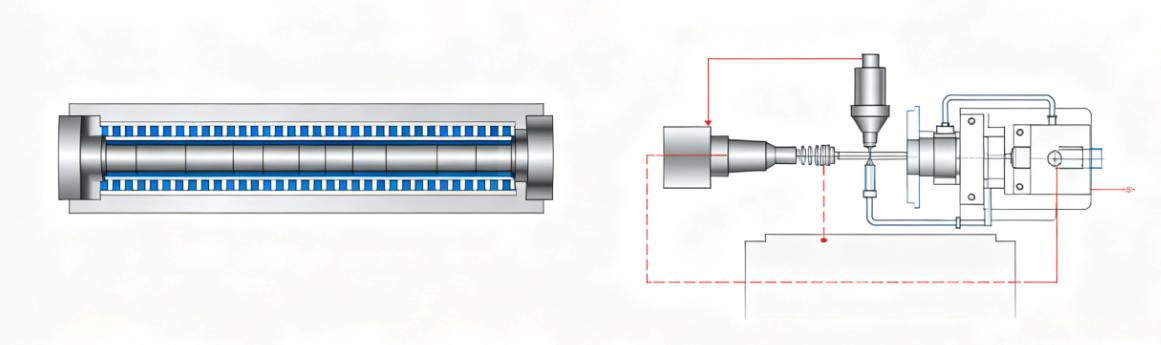
Selecting the perfect PCD die goes beyond just picking a material—it’s about balancing efficiency, durability, and wire quality for every application. From high-strength steel to ultra-fine copper, the right die design and complementary equipment can transform your production line.
Partnering with NJ-ModernDiamond Co., Ltd. ensures access to expertly engineered PCD wire drawing dies and tailored solutions, helping you reduce downtime, improve surface finish, and achieve consistent, high-quality wire output every run.
A: Yes, PCD dies can be re-polished or repaired using EDM or specialized polishing techniques, extending die life and maintaining wire quality.
A: Silicon-based PCD dies are ideal for high-strength steel due to excellent thermal stability and wear resistance under high-stress drawing.
A: Higher speeds generate heat and friction, requiring PCD dies with strong thermal conductivity and durability to prevent wear and maintain surface quality.
A: Multi-pass reductions are preferred for high-volume or hard wires, balancing stress on the die and wire integrity while minimizing breakage.
A: They are less economical upfront for small runs but provide superior quality, lower downtime, and long-term savings when durability and precision matter.