Views: 0 Author: Site Editor Publish Time: 2026-02-25 Origin: Site
Tungsten carbide is known for its extreme hardness and durability, but is tungsten carbide magnetic? Its magnetic behavior depends on binder metals like cobalt or nickel. Knowing this helps you pick the right grade for tools, industrial parts, or jewelry. In this guide, we’ll explore tungsten carbide’s magnetic properties, how different grades respond, and tips for safe use in sensitive environments like MRI rooms.
Tungsten carbide, often called WC, is a compound made of tungsten (W) and carbon. Unlike pure tungsten, it’s extremely hard and designed for heavy-duty use. Pure tungsten is dense and strong, but combining it with carbon changes its properties drastically.
You’ll find tungsten carbide in many forms. They include rods, rings, drill bits, wear parts, and industrial coatings. Each form is tailored for a specific job. For example, rings use fine, polished WC, while mining drill bits rely on tough, high-hardness material. Coatings often appear on machinery parts to resist wear and extend lifespan.
Tungsten carbide stands out because of its combination of hardness and durability. Here are the main properties:
Hardness: Mohs scale rating around 9; Vickers hardness roughly 18–22 GPa. This makes it nearly as hard as diamond.
Density: About 15.63 g/cm³, giving it substantial weight and resistance to wear.
Melting & Boiling Points: Melts near 2,870 °C; boils around 6,000 °C. It keeps shape under extreme heat.
Thermal & Electrical Conductivity: Transfers heat well; conducts electricity moderately.
Wear & Corrosion Resistance: Survives friction, abrasion, and many chemicals.
| Property | Value | Note |
|---|---|---|
| Hardness (Mohs) | 9 | Second only to diamond |
| Density | 15.63 g/cm³ | Very dense, heavy material |
| Melting Point | 2,870 °C | Maintains hardness at high heat |
| Boiling Point | 6,000 °C | Extremely high thermal stability |
| Thermal Conductivity | 110 W/m·K | Efficient heat transfer |
| Electrical Conductivity | Moderate | Not as good as copper |
| Chemical Resistance | High | Resists acids, corrosion |
They make tungsten carbide ideal for cutting tools, wear parts, industrial machinery, and coatings.
Tungsten carbide isn’t always solid WC. Most industrial WC is cemented carbide, which means tiny WC grains are bonded together using metal.
Cemented Carbide: WC grains combined with a metal binder like cobalt, nickel, iron, or nickel-chrome alloys. Binder type affects strength, toughness, and sometimes magnetic response.
Coatings vs Solid WC: Coatings protect machinery surfaces, while solid WC parts endure heavy wear on their own.
Binder Metals:
Cobalt: Improves toughness; may slightly increase magnetism.
Nickel: Offers corrosion resistance; usually less magnetic.
Iron & Nickel-Chrome Alloys: Sometimes used for specific mechanical or chemical properties.
These variations let engineers choose tungsten carbide suited for cutting tools, industrial rollers, mining equipment, and even jewelry.
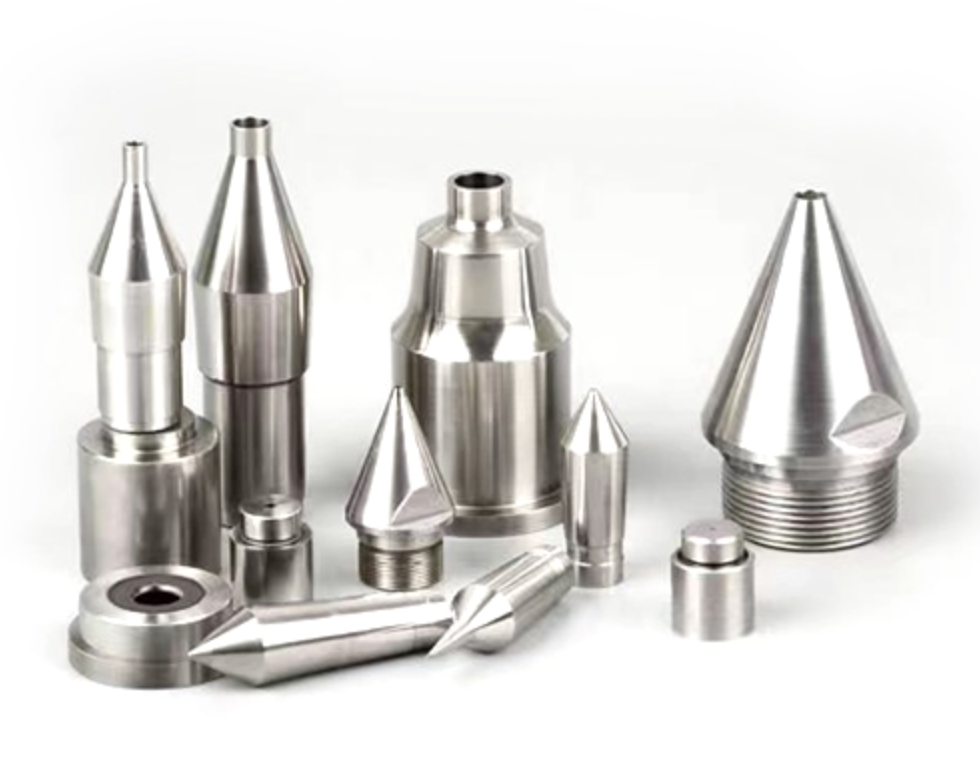
Pure tungsten is not magnetic in any practical sense. It shows paramagnetism, meaning it’s slightly attracted to magnetic fields but cannot retain magnetism. Its atomic structure prevents magnetic domains from forming, unlike ferromagnetic metals such as iron or cobalt.
Weak magnetic susceptibility: +6.8 × 10⁻⁶ emu/g, almost negligible.
Comparison: Iron’s susceptibility is over 10³ emu/g, thousands of times stronger.
Even under strong magnets, tungsten will not stick noticeably.
When tungsten combines with carbon to form WC, the crystal structure changes.
WC crystal structure: Hexagonal lattice, non-magnetic by nature.
Role of carbon: It stabilizes the lattice and prevents tungsten’s electrons from aligning, reducing any magnetic response.
Effect: Pure tungsten carbide behaves as effectively non-magnetic in real-world applications.
This is why industrial parts like solid WC drill bits or high-purity rings don’t react to magnets.
Most industrial WC is cemented carbide, meaning tiny WC grains are bonded with a metal binder. The type and percentage of binder can influence magnetism.
Cobalt (Co): Ferromagnetic, increases magnetic response. Even a small percentage can make WC slightly magnetic.
Nickel (Ni) and nickel-chrome alloys: Much less magnetic, often leaving WC nearly non-magnetic.
Iron (Fe): Strongly magnetic, can make the material noticeably responsive if used as a binder.
Magnetic behavior changes depending on the binder amount, distribution, and manufacturing process.
Quick points:
More cobalt → stronger magnetic response.
Nickel or low-cobalt → weak or negligible magnetism.
Substrate materials may also influence overall magnetic behavior.
| Grade | Binder Content | Magnetic Response |
|---|---|---|
| Pure WC | 0% | Non-magnetic |
| WC + 6–15% Co | 6–15% | Weakly magnetic |
| WC + 15–30% Co | 15–30% | Noticeably magnetic |
| WC + Ni | Varies | Weakly magnetic / non-magnetic |
Different grades allow engineers to choose WC for applications requiring either non-magnetic behavior, like MRI-safe tools, or where slight magnetism is acceptable.
Understanding the magnetism of tungsten carbide is important in industrial settings.
CNC Machining & Cutting Tools: Tools made from WC need consistent performance. Non-magnetic grades prevent interference with electronic sensors or measurement devices.
Mining Drill Bits & Wear-Resistant Equipment: WC components face extreme friction. Magnetic behavior could affect machinery calibration in some setups.
Tungsten Carbide Coated Rollers: Used in papermaking, steel, and plastics. Selecting low-magnetic grades ensures reliable operation near magnetic detection systems.
Tungsten carbide is increasingly popular for rings and bracelets. Magnetism is a key consideration for safety and daily wear.
MRI Safety: Pure or low-binder WC rings are safe in MRI scanners.
Magnetic Interference: Avoid high-cobalt grades if electronic or medical devices are nearby.
Choosing Jewelry Grades: Nickel-bound or pure WC minimizes magnetism while keeping hardness and scratch resistance.
Magnetism matters even in advanced engineering and scientific fields.
Aerospace Components: CNC-machined tungsten parts for engines and counterweights benefit from low-magnetic WC to prevent sensor interference.
Defense Equipment: Armor-piercing projectiles use tungsten carbide for hardness and density, while controlling magnetism ensures performance in guidance systems.
Medical Tools: Surgical instruments, tips, and radiation shielding require non-magnetic WC to avoid affecting MRI or sensitive medical electronics.
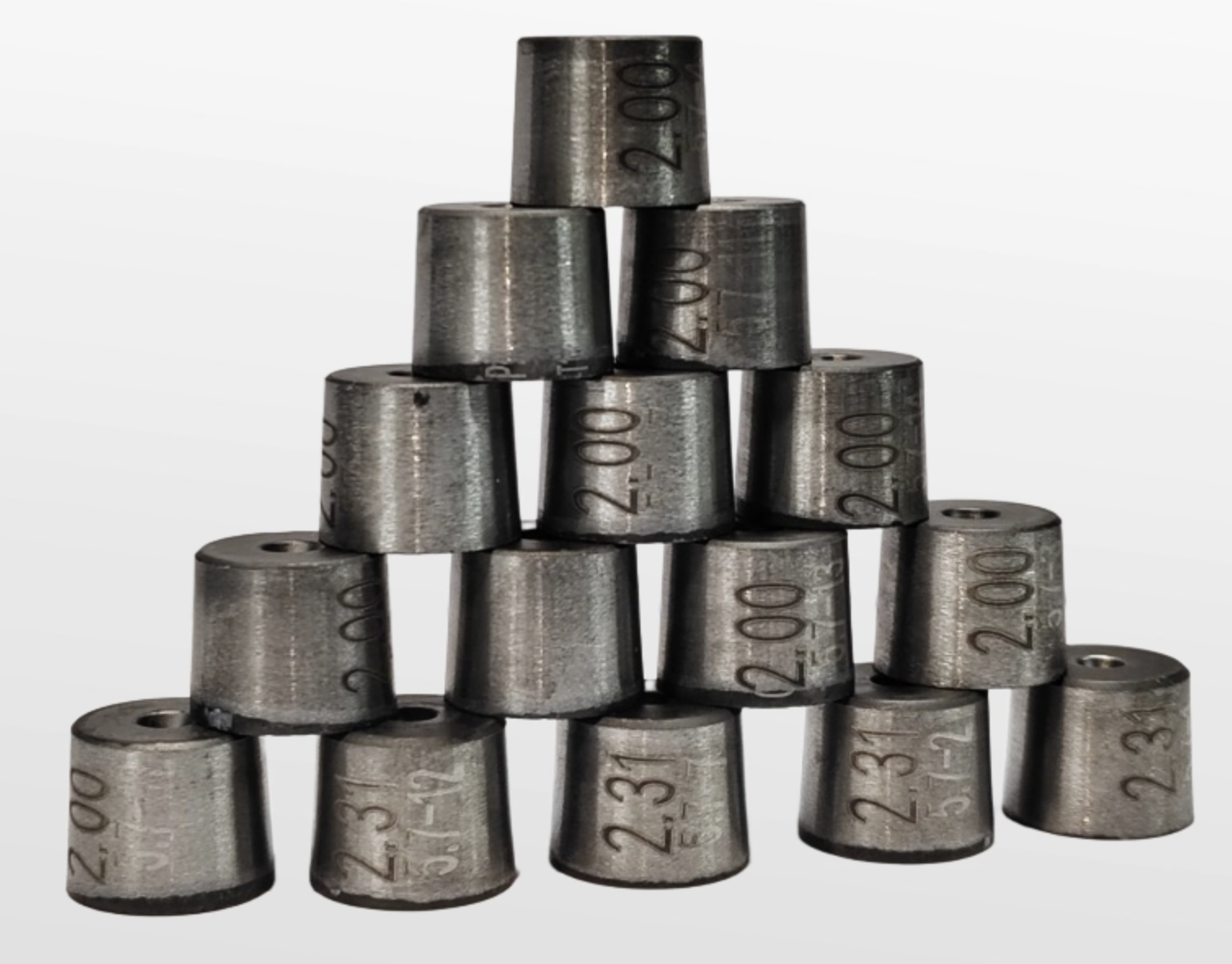
The type of metal used to bind WC grains directly affects magnetism. Cobalt is ferromagnetic, so even small amounts can make the material slightly magnetic. Nickel or nickel-chrome binders are less responsive, keeping WC mostly non-magnetic. The higher the binder content, the stronger the magnetic response. Choosing low-binder grades helps maintain minimal magnetism.
How tungsten carbide is processed also matters:
Sintering: High temperatures consolidate WC grains and binders, affecting the final magnetic behavior.
CVD Coating: Produces a thin WC layer on a substrate. Magnetism depends on the underlying metal and any added binders.
Thermal Spraying: Can mix metals into the coating, slightly altering magnetic properties.
Process choice can subtly change how the material reacts to magnetic fields.
Some applications use WC combined with other metals or ceramics. If the added metals are magnetic, the coating may show weak magnetism. For example:
WC + cobalt alloys → weakly magnetic
WC + nickel-chrome → largely non-magnetic
Even a small percentage of ferromagnetic metals in a composite can change the magnetic response noticeably.
External factors also play a role:
Temperature: High temperatures can slightly reduce magnetic effects in some binders.
Magnetic Fields: Strong fields can temporarily magnetize WC if cobalt or iron is present, but the effect disappears when the field is removed.
Understanding these environmental influences helps engineers select the right grade for sensitive applications.
A: No, pure tungsten is not magnetic. It exhibits very weak paramagnetism, far weaker than iron.
A: Yes, if they contain ferromagnetic binders like cobalt. Pure WC or nickel-bound items are mostly non-magnetic.
A: Yes, higher cobalt percentages increase magnetic response, while nickel or low cobalt keeps it weakly magnetic or non-magnetic.
A: By selecting grades with low magnetic binders, controlling coating composition, and choosing non-magnetic substrates when needed.
A: No, even cobalt-bound WC is far less magnetic than steel or iron.
Tungsten carbide’s magnetism isn’t always obvious, yet it plays a key role in selecting the perfect grade for your project. Low-cobalt or nickel-bound tungsten carbide offers almost no magnetic response, making it ideal for medical tools, electronics, or non-interfering jewelry.
Next time you choose tungsten carbide for cutting, drilling, or even a stylish ring, consider the binder and grade carefully. For high-quality tungsten carbide solutions, trust NJ-ModernDiamond Co., Ltd. All Rights Reserved to guide you to the right choice.